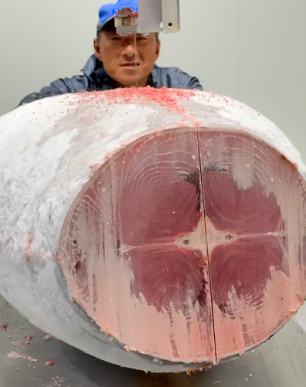
In this striking scene, a massive cross-section of freshly harvested tuna rests on a stainless steel worktable, its deep ruby flesh revealed as a worker guides it through a vertical band saw with steady, practiced control. The image captures a moment where craftsmanship meets industrial efficiency—an intersection that defines modern seafood processing. Every detail, from the clean cut surface to the careful positioning of the fish, reflects the importance of precision, hygiene, and expertise in handling high-value marine products.
Large pelagic fish such as tuna are prized worldwide for their flavor, texture, and nutritional benefits, but transforming them from ocean catch to market-ready portions requires specialized techniques. The band saw visible in the image is an essential tool in professional seafood facilities, allowing processors to divide large fish into manageable sections while preserving the integrity of the meat. Unlike manual cutting methods, mechanical sawing ensures uniform thickness, minimizes waste, and maintains structural consistency—key factors for both commercial distribution and culinary presentation.
The worker’s posture and focus demonstrate the human element behind this technical process. While machinery provides power and accuracy, experience determines the outcome. Skilled operators must understand the anatomy of the fish, identifying optimal cutting points that protect premium sections such as loins and steaks. A single misaligned cut can reduce product value, making attention to detail critical. This combination of knowledge and mechanical assistance highlights how traditional butchery skills evolve within industrial environments.
Equally important is food safety. The clean workspace, protective clothing, and controlled cutting environment suggest adherence to strict sanitation standards. In seafood processing, temperature management and contamination prevention are vital to preserving freshness and preventing spoilage. Facilities typically operate under rigorous regulatory oversight, ensuring that products reaching consumers meet health and quality requirements. The visible frost or chilled surface on the fish indicates that cold-chain handling is being maintained, which helps retain both texture and nutritional quality.
Beyond technical considerations, the image symbolizes the broader global seafood supply chain. Tuna fisheries support livelihoods across multiple continents—from fishermen and processors to distributors, chefs, and retailers. Efficient processing methods enable these networks to function sustainably by maximizing yield from each catch. When done responsibly, such practices contribute to reducing waste and supporting economic stability within coastal communities.
There is also an aesthetic dimension to the scene. The symmetrical pattern of muscle fibers in the cross-section resembles natural artistry, revealing the biological complexity of marine life. For culinary professionals, this visual appeal translates into plating potential, where the color and grain of tuna meat become central to gourmet presentations. Thus, what begins as an industrial procedure ultimately influences dining experiences worldwide.
Overall, this concept image illustrates more than just cutting a fish—it represents precision engineering, skilled labor, food science, and global commerce working together. It reminds viewers that behind every seafood dish lies a sophisticated process requiring dedication, technology, and respect for the resource itself.
Source By : @samurai_food